Speech Delay
Raising a bilingual child with a speech delay in the UAE
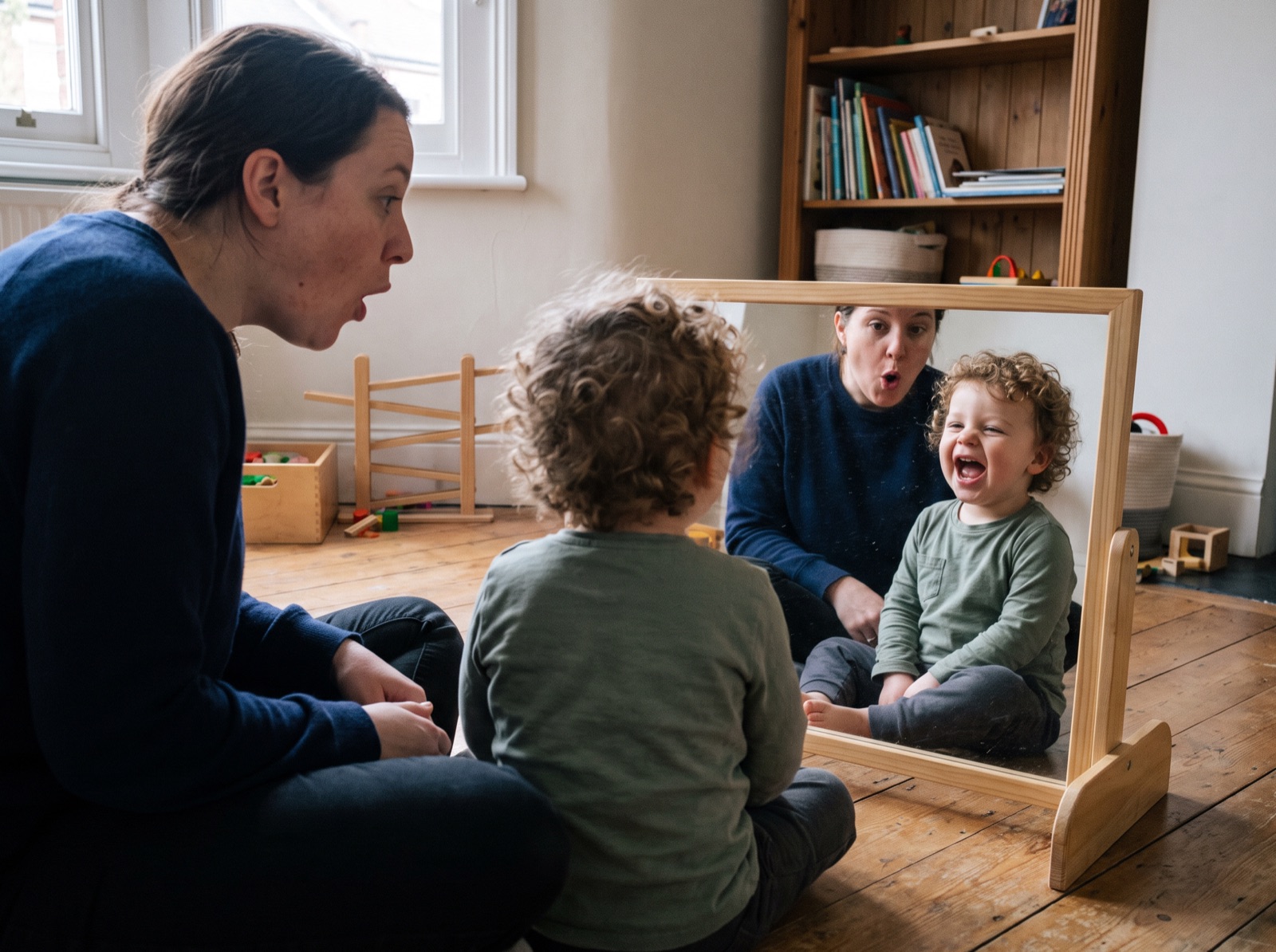
In a country where a child might hear Arabic from a grandparent, English at nursery, and a third language at home, one of the most common worries we hear is whether raising a child bilingual — or trilingual — is the reason they're not talking yet. It's an understandable worry, and it's also one of the most persistent myths in speech and language development: bilingualism does not cause speech delay.
Why bilingual development looks different, not delayed
Children raised with more than one language often reach individual milestones slightly differently than monolingual children — they might have a smaller vocabulary in each language taken separately, even though their combined vocabulary across both languages is on track. Code-mixing, where a child blends words from two languages in the same sentence, is a completely normal part of bilingual development, not a sign of confusion. Comparing a bilingual child's English vocabulary alone against a monolingual English-speaking peer's isn't a fair comparison, and it's one of the most common reasons bilingual children get wrongly flagged, or wrongly reassured, based on incomplete information.
What's actually worth watching for
The genuine red flags aren't language-specific — they show up across every language a child is exposed to. A child who isn't combining words in either language by the expected age, who struggles to follow simple instructions at home in the family's main language, or who isn't understood by unfamiliar adults in any language, is showing signs worth assessing regardless of how many languages are in the mix. A speech and language therapist assessing a bilingual child should be looking at the child's overall language system, not marking them down against a single-language benchmark.
When it's something more than a language mix
One condition that's easy to miss in a multilingual household is Developmental Language Disorder (DLD) — a lifelong difficulty understanding or using language that isn't explained by hearing loss, autism, or a lack of language exposure, and that affects roughly one in fourteen children. DLD often goes unnoticed for longer than a more obvious speech delay, because a child with DLD can usually hold a basic conversation and doesn't "sound unusual" on the surface — the difficulty shows up more in subtler ways, like following multi-step instructions or telling a story in order. There's often a family pattern too, with a parent or sibling who had similar language difficulties growing up. In a bilingual household, DLD is especially easy to write off as "it's just the two languages" when it isn't.
What we'd actually recommend
Keep speaking your home languages — reducing input to "simplify" things for your child isn't supported by the evidence, and it usually just means less rich language exposure overall, not more support. If you're worried, ask for an assessment that looks at your child's language development across every language they're exposed to, not only the one used at nursery or school. A good assessment will also ask about family history and how your child communicates at home, not only what a teacher sees in English.
Getting support in a multilingual home
Multilingualism is a strength worth protecting, not a variable to strip out while you wait and see. If your child's language development is genuinely behind — in every language, not just one — earlier support tends to make the biggest difference. Our speech delay support for toddlers page covers what typical development looks like and when it's worth booking an assessment.