Down Syndrome
Down syndrome and early intervention: what the first year looks like
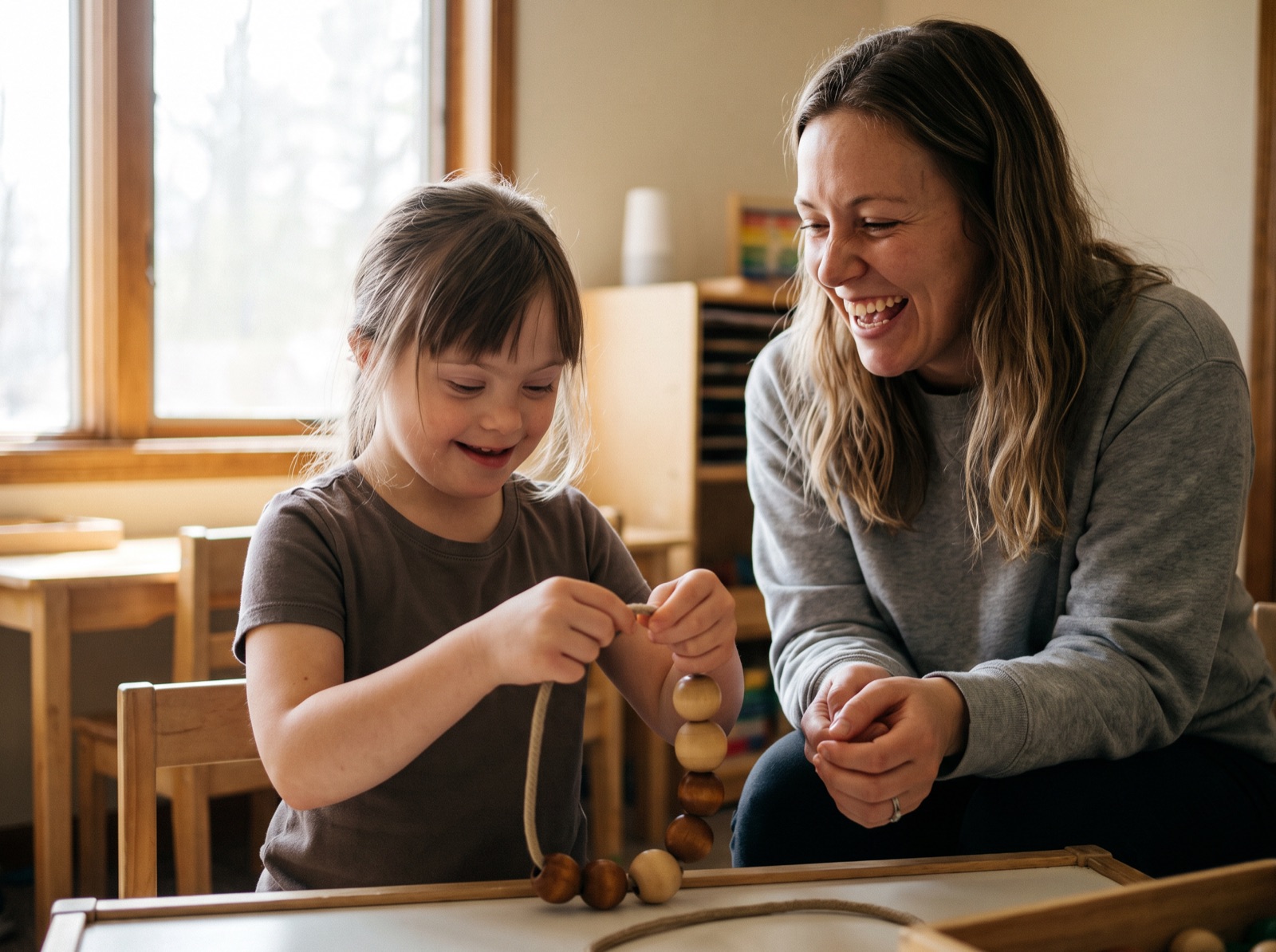
The first year after a Down syndrome diagnosis — whether prenatal or at birth — can feel like a lot at once. Here's a grounded look at what early support typically involves.
The early priorities
In the first year, physical therapy for motor milestones and, often, feeding support tend to be the priority areas, alongside close paediatric monitoring for related health considerations common with Down syndrome.
Speech and language starts early too
Even before a baby is talking, early language-focused interaction — narrating routines, responding to sounds and early gestures — lays groundwork that speech therapists can help you build on deliberately.
What "early intervention" actually means practically
It's rarely a clinical, formal-feeling process in year one. Much of it happens through coached daily routines — feeding, play, bath time — with a therapist guiding you rather than running isolated sessions.
Pace yourselves
There's no need to start everything at once. A good clinical lead will help you prioritise based on where your child actually is, not a generic milestone chart.