Learning Differences
Dyslexia doesn't mean "behind" — what structured literacy actually looks like
"Behind in reading" is often the phrase families hear first — but dyslexia isn't a delay that time alone will close. It's a different way the brain processes written language, and it responds best to a specific teaching approach.
What makes structured literacy different
Rather than relying on memorisation or context guessing, structured literacy teaches the explicit, systematic rules connecting letters and sounds — building up from the smallest units of language in a defined sequence.
Why it's multisensory
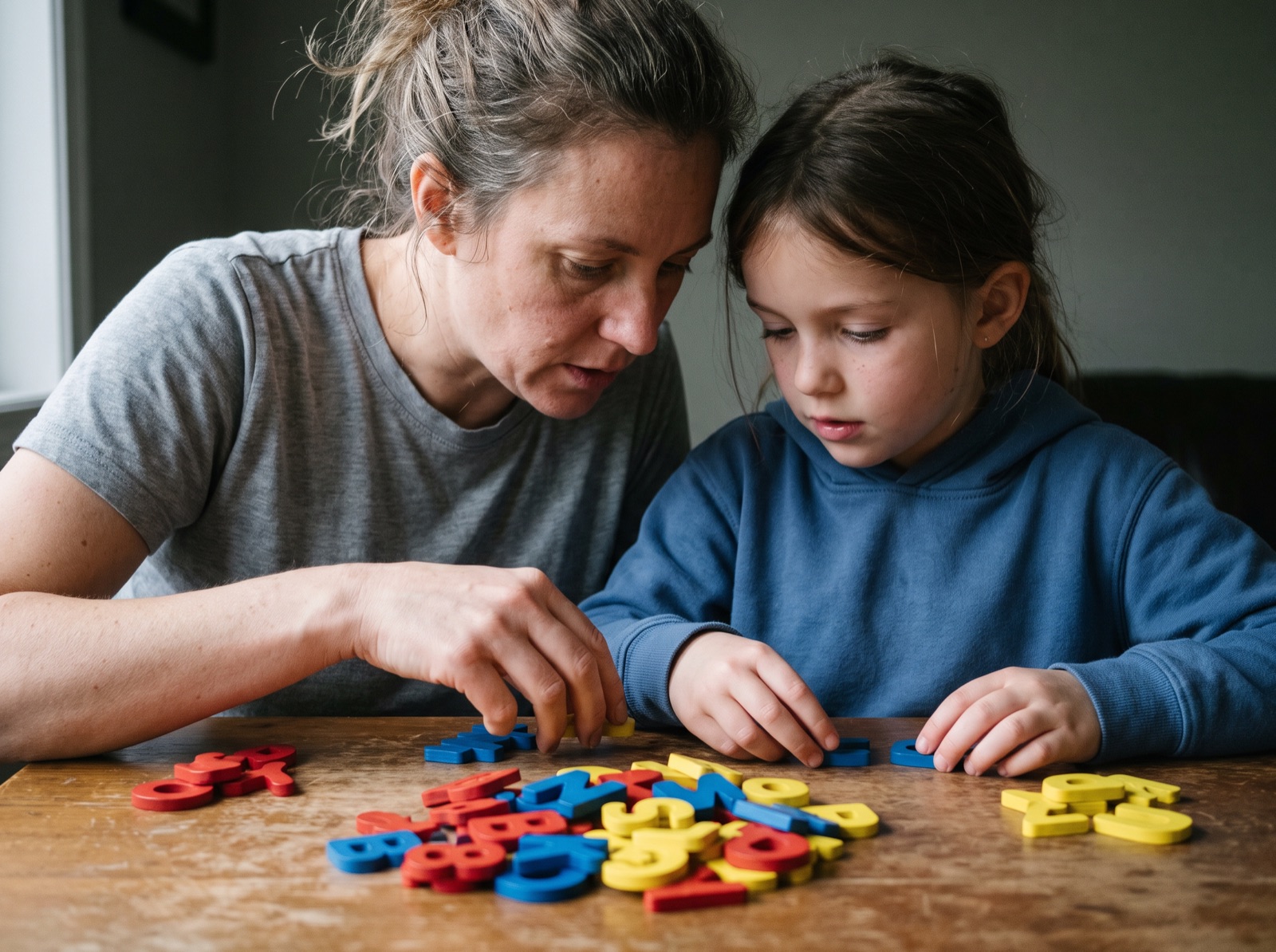
Many structured-literacy methods use sight, sound and touch together — tracing letters while saying sounds aloud, for example — which research consistently shows helps dyslexic learners build stronger, more durable connections.
What progress actually looks like
Improvement tends to be gradual and cumulative rather than sudden. A good tutor will track specific, measurable skills over time rather than offering vague reassurance that things are "getting better."
It's not about intelligence
Dyslexic children are often strong verbal thinkers with a specific, well-documented processing difference — not a general learning gap. The right teaching method makes a bigger difference than extra time on the same method.