Sensory Processing
Understanding sensory processing differences in young children
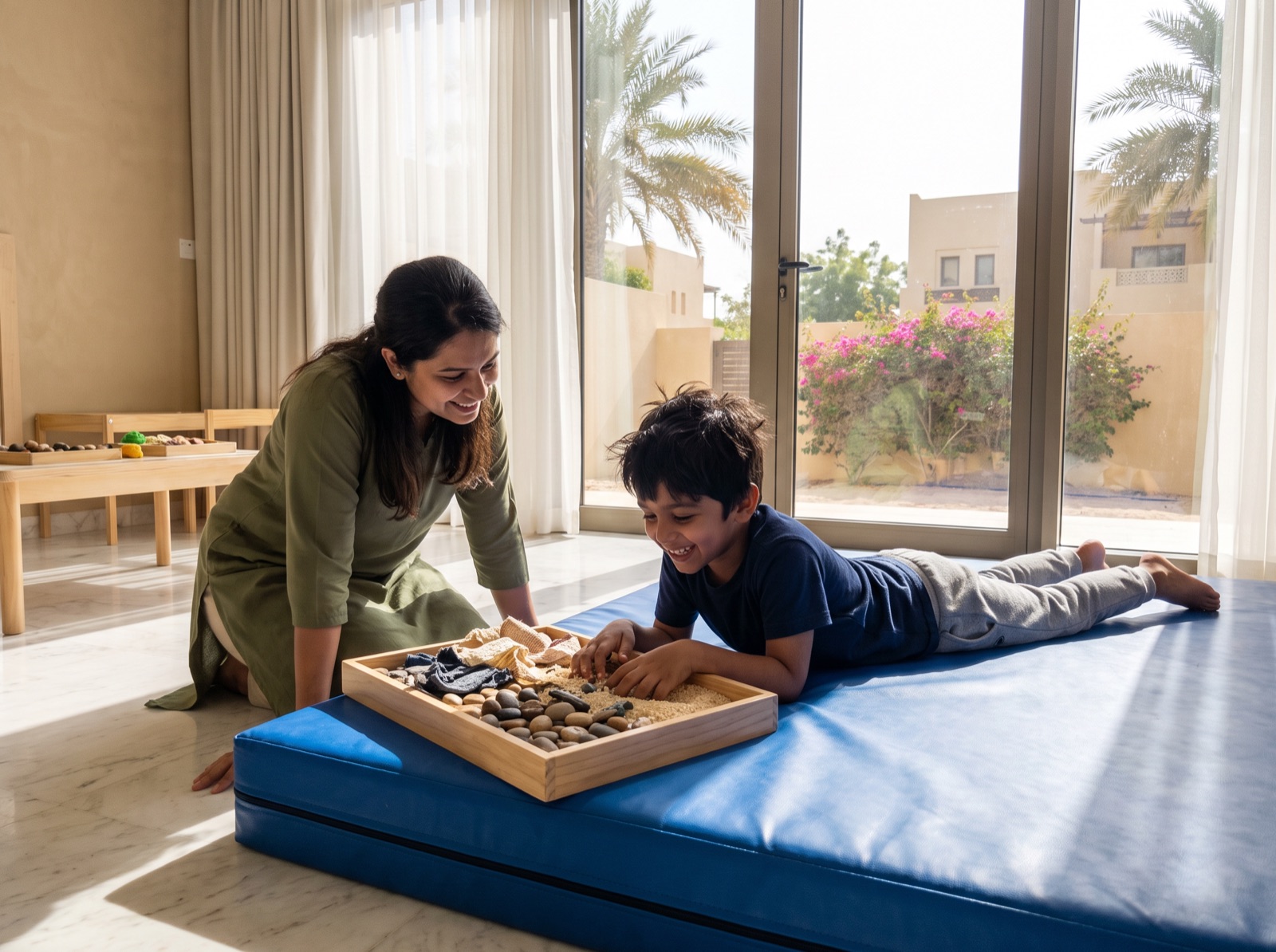
Sensory processing differences are common but often misread as "difficult behaviour" rather than what they usually are — a nervous system responding to input differently than expected.
Over-responsive vs under-responsive
Some children are overwhelmed by sound, light or touch that others barely notice. Others seek out intense input — spinning, crashing, jumping — because their systems need more stimulation to register it.
Why it's often missed
Because reactions can look like tantrums or defiance, sensory differences are frequently misattributed to behaviour alone, especially in children who don't have another diagnosis to prompt closer attention.
What occupational therapy actually addresses
An OT assessment identifies which specific sensory inputs are the trigger, then builds a practical plan — environmental adjustments, calming strategies, and gradual exposure — tailored to that child specifically.
A note for parents
If a "meltdown" seems consistently tied to a specific sound, texture or environment, that pattern is worth mentioning to a professional — it's often more informative than the meltdown itself.