Autism
What is stimming, and should you try to stop it?
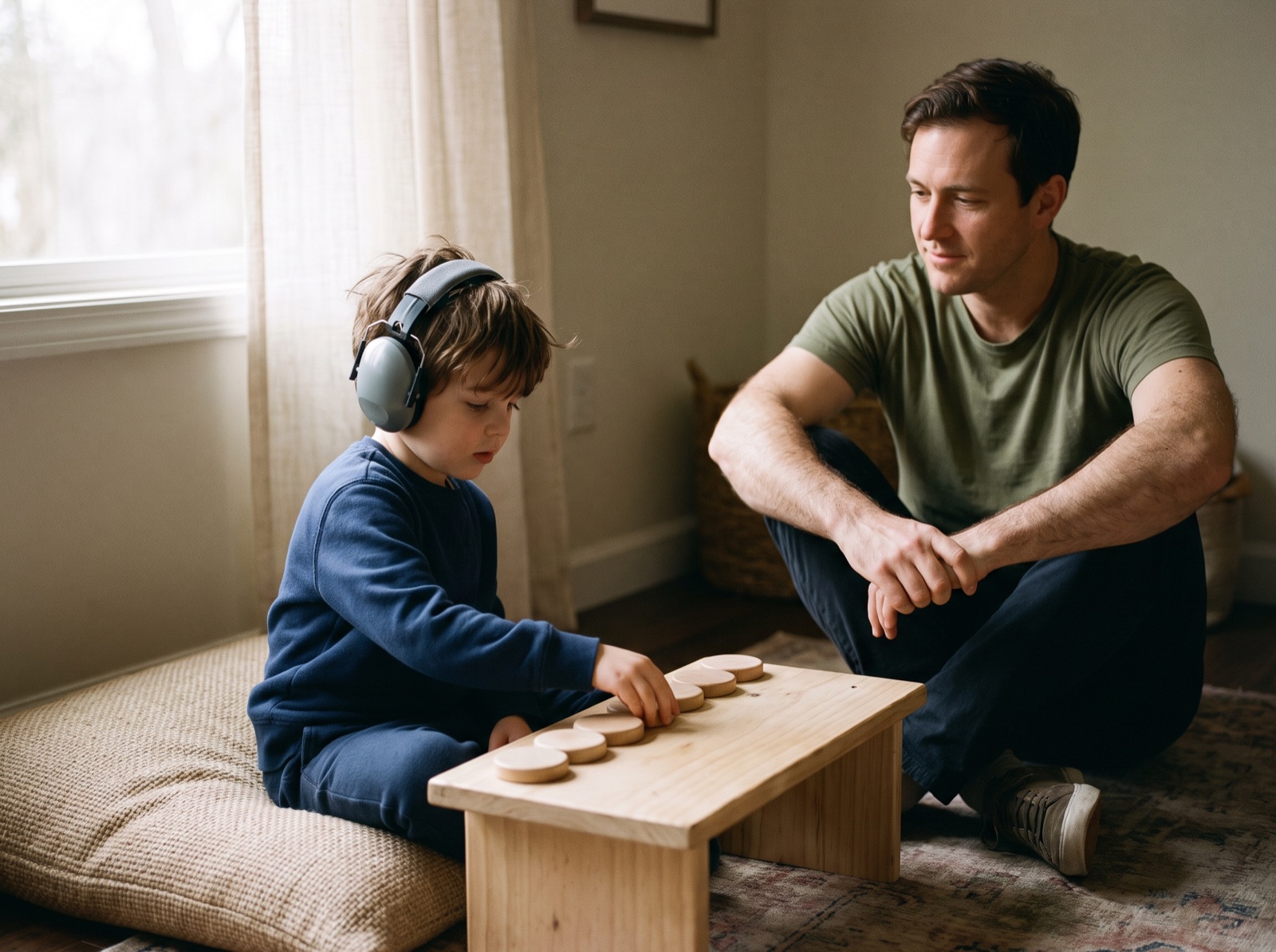
"Should I make him stop doing that?" is one of the most common questions we hear about stimming. Here's how to think about it.
What stimming actually is
Stimming — short for self-stimulatory behaviour — covers repetitive movements, sounds, or actions like hand-flapping, rocking, spinning, humming, or repeating phrases. It's common in autistic children and adults, and plenty of non-autistic people stim too, just in smaller or more socially typical ways, like tapping a pen or bouncing a leg.
Why children stim
Stimming usually serves a purpose: managing sensory input, regulating emotion, releasing excess energy, or simply feeling good. It's rarely random, and it's rarely defiance — it's more often a strategy a child has found that works for them.
When it's not something to worry about
If a stim isn't hurting your child or anyone else, and it isn't blocking them from learning, communicating, or taking part in things they want to do, it generally doesn't need to change. Trying to eliminate a harmless stim can add stress without much benefit, and can send the message that a normal part of how they self-regulate is something to be ashamed of.
When it's worth a closer look
It's reasonable to want support if a stim is causing injury, is significantly limiting participation at school or with peers, or seems to be increasing rather than settling over time. In those cases, the goal usually isn't to stop the behaviour outright — it's to understand what it's doing for your child first.
What professional support actually looks like
A therapist trained in this — often through ABA or occupational therapy — will typically look at the function of the stim before anything else, then help build a safer or more workable alternative that meets the same need, rather than simply suppressing it. This kind of support can run alongside a formal diagnosis, not just after one.
If you're noticing a stim that concerns you, our autism support page has more on how we think about this, or get in touch for a no-pressure conversation.