Auditory Processing
Auditory Processing Disorder: When a Child Hears Fine But Still Struggles to Follow Instructions
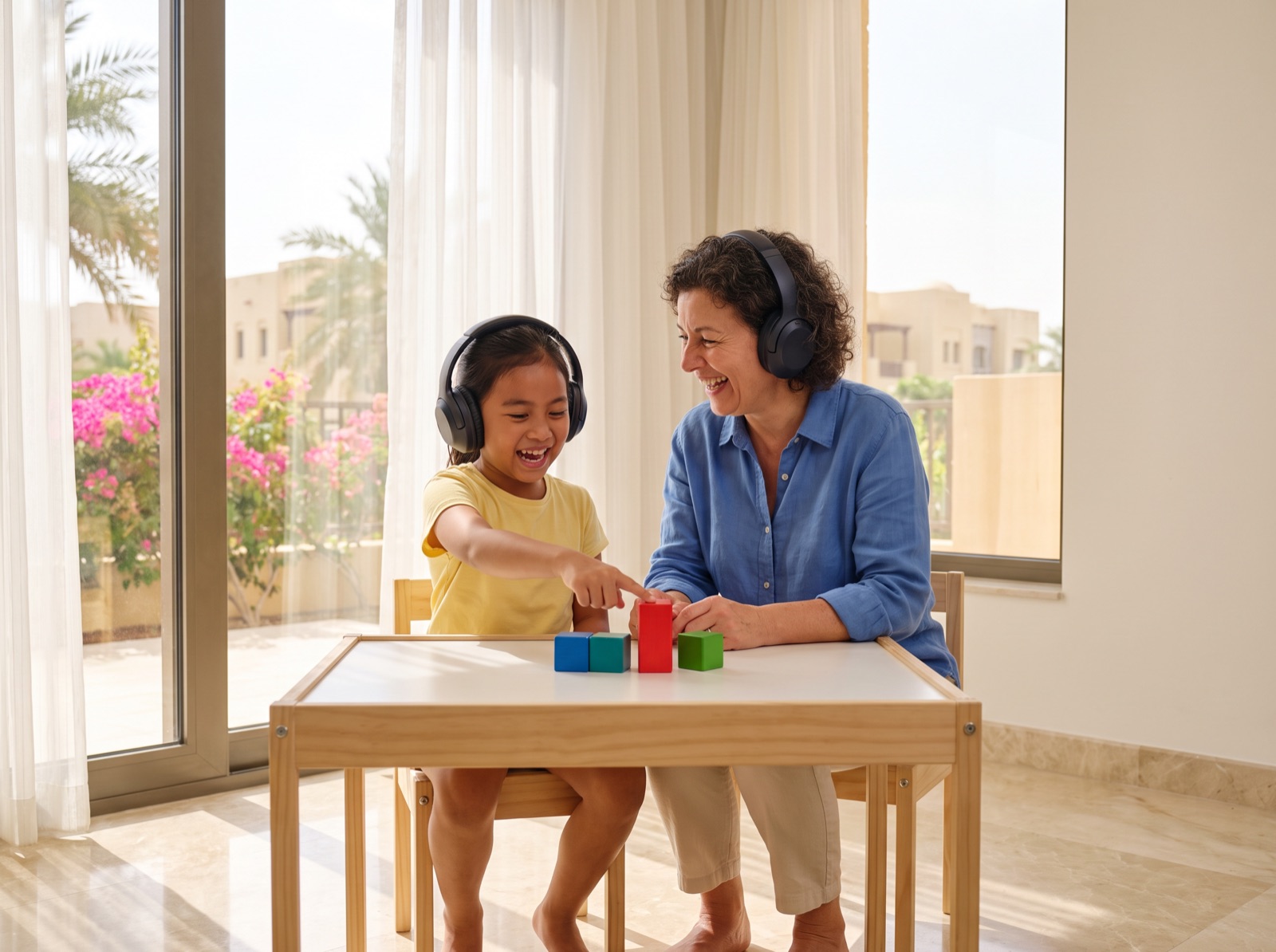
"He hears me fine, he just doesn't listen." It's one of the most common things said about a child who later turns out to have Auditory Processing Disorder, and in a strange way it's an accurate description of what's happening, just not in the sense it's usually meant.
Hearing versus processing
Hearing is about the ear detecting sound, which is exactly what a standard hearing test measures. Auditory processing is a different job entirely: it's what the brain does with sound once it arrives, including filtering speech out from background noise, telling apart similar-sounding words, and holding a string of spoken instructions in mind long enough to act on all of them. A child with Auditory Processing Disorder, or APD, can have a completely normal hearing test and still struggle significantly with that second part, which is exactly why the condition gets missed or misread so often.
What it can look like day to day
A child with APD might frequently ask "what?" or "huh?" despite a hearing test that came back perfectly normal. They often do noticeably better one-on-one in a quiet room than in a group or a busy classroom. Multi-step instructions are a common sticking point — told to put their book away, line up, and bring their water bottle, only the last part might actually register. Some children appear to zone out or seem inattentive specifically in loud or verbally busy environments, or seem far more worn out than classmates by the end of a noisy school day, simply from the effort of constantly filtering sound.
Why it gets confused with other things
APD overlaps heavily with how ADHD and language disorders can present, and children with any of these can end up mislabelled as "not paying attention" or "not listening" when the real issue is that noisy or verbally dense environments are genuinely harder for their brain to process. That's not a matter of willpower, and it's not something that improves by asking a child to concentrate harder or by repeating an instruction louder.
Getting a clear picture
The right first step is ruling out hearing loss with a standard hearing test. If that comes back clear but the concerns continue, the next step is a specific auditory processing assessment carried out by an audiologist trained in APD — a different, more detailed set of tests than a general hearing check, designed to look specifically at how sound is processed rather than simply detected.
What helps day to day
Reducing background noise where possible, preferential seating near the teacher, and breaking instructions down into single steps with a quick check for understanding all make a real difference. Pairing a spoken instruction with a visual or written cue, and allowing a beat of extra time before expecting a response, gives a child's brain the processing room it needs. None of this is about talking louder or more slowly for its own sake — it's about reducing how much competing sound a child has to filter through before the instruction that actually matters gets through.
If your child seems to hear everything but still misses instructions, especially in noisy settings, it's worth having it properly assessed rather than assuming it's a listening or behaviour issue. Our assessment page explains what that involves, and from there we connect UAE families with the right audiologists and therapists.
If you'd like to understand what day-to-day support looks like, our Auditory Processing Disorder support page covers assessment, therapy options and what to expect.