ADHD
A SEN governess for a child with ADHD
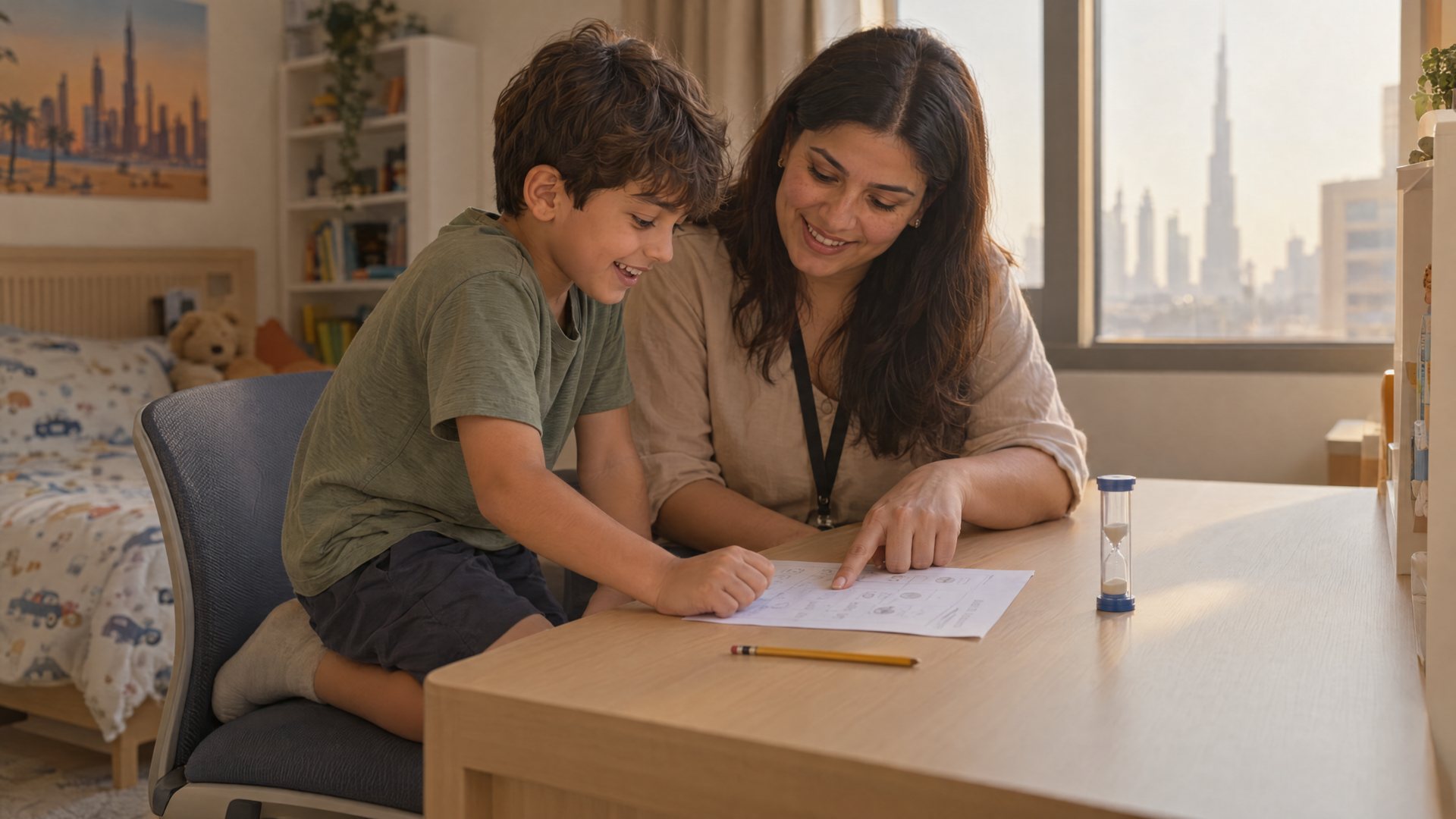
The short answer: for a child with ADHD, a SEN governess provides the structure that the afternoon and evening otherwise lack. She breaks tasks down, manages transitions, runs homework in short blocks, and helps your child recover from a difficult moment without the whole evening being lost to it.
Where the day goes wrong
For many children with ADHD, school holds together because it is structured. The hours after it are not. Homework that should take twenty minutes takes ninety. Getting from screen to dinner to bath to bed is four separate arguments. None of this is defiance; it is what difficulty with attention, starting tasks and switching between them looks like at six in the evening.
What a governess actually does
- Breaks work into short blocks with movement between them, rather than one long sitting
- Warns before every transition, so the change is expected rather than sprung
- Makes the routine visible, with a schedule your child can see and tick off
- Sets up the environment: a clear desk, one task out at a time, distractions moved rather than forbidden
- Coaches regulation in the moment, and talks it through afterwards when your child is calm
- Keeps school in the loop, so the same strategies are used in class and at home
What to expect
Not a different child. Expect evenings that are shorter and calmer, homework that gets finished, and over time a child who starts to use the strategies without being prompted. That last part is the goal, and good support plans its own reduction from the start.
What she does not do
She does not diagnose, prescribe, or decide about medication. Those belong with your child's doctor. Where there is a behaviour or therapy plan, she follows it and reports on it.
Where to start
If your child has not been assessed recently, begin with an assessment, so that the support is aimed at the right things. Our ADHD support page explains how we work, and the SEN governess page sets out what a placement includes.