Autism
A SEN governess for an autistic child: what good support looks like at home
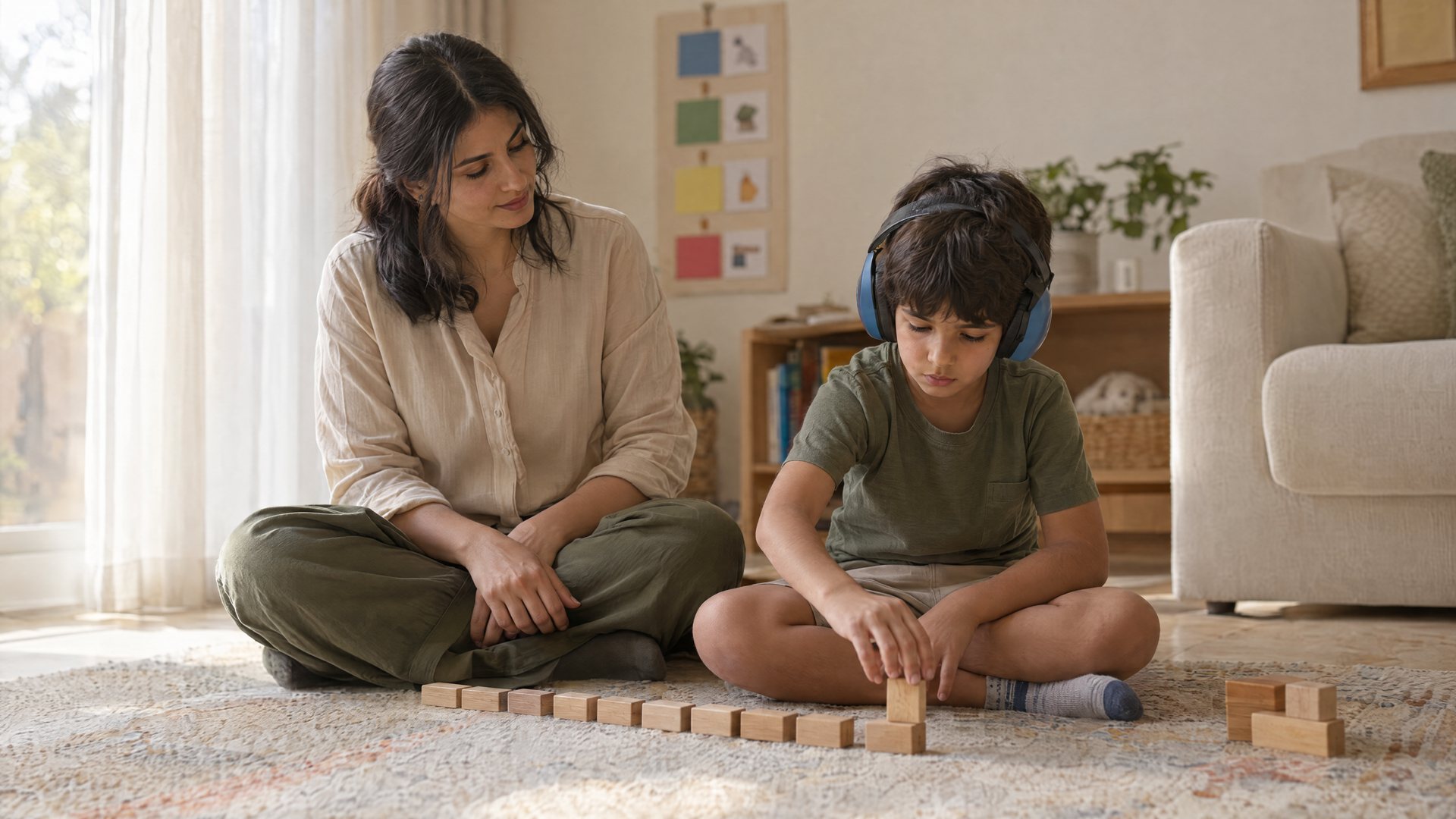
For many autistic children, school is the part of the day that is engineered. There is a timetable, a support plan, a room with rules. Home is where everything is negotiable, and that is exactly what makes it harder — for the child and for everyone else in the house.
Good home support does not make the house feel like school. It makes the day predictable enough that your child does not have to spend all their energy working out what is coming next.
Predictability is the intervention
Most of what a skilled specialist does looks unremarkable from the outside: the same order of things, the same warnings before transitions, the same words for the same moments. It is unremarkable because it is working. The value is in it happening identically every day, which is precisely what an overstretched family cannot always manage alone — not for lack of will, but because family life has weather.
Communication, taught where it is needed
An autistic child who communicates well in a therapy room and not at home has not generalised the skill — and generalisation is most of the work. A governess is in the right place for it: the request for a snack, the refusal that does not have to become a meltdown, waiting for a turn with a sibling, the tolerance of a plan that changed. These are taught in the situation, not at a table.
Whatever system your child uses — speech, signs, PECS, a device — everyone in the house should be using it consistently. Where support is doing its job, the system gets used more, not less.
Sensory load is a schedule problem
Sensory needs do not arrive only when a child is dysregulated; they build all day. Effective support plans around them: movement before the demanding task, not after the meltdown; the noisy errand at the quiet hour; a place in the house that is genuinely allowed to be boring. If an occupational therapist has written a sensory plan, following it at home is a large part of the job.
Behaviour, read rather than managed
Every behaviour is doing something for the child. A specialist trained in this looks for the pattern — what came before, what it achieved, what would work better — and records it, so that the person who designs the programme has something real to work from. A specialist who is not trained in it manages the moment and the moment repeats forever.
This is where supervision earns its keep. In our managed placements a clinical lead reviews those records and changes the plan. Without that, you have data nobody reads.
What to watch for
- Prompt dependence. Your child completing everything beautifully with an adult beside them, and nothing without. Good support reduces itself on purpose.
- Compliance mistaken for progress. A quiet child is not automatically a child who is learning. Ask what skills have been built, not how smooth the week was.
- A plan that never changes. Children change. A plan that has not been adjusted in six months is not stable, it is unattended.
- School and home pulling in different directions. If the classroom and the living room use different strategies for the same behaviour, your child is doing translation work on top of everything else.
Where to start
Start with the goals, not the hire. If nobody has assessed your child recently, that is the first step — our assessment exists for exactly this, and our autism support page explains how we work once there are goals to work to.
If you already have a plan and need someone to carry it at home, that is the role our SEN governess page describes.