For Schools
ABA therapy at school in the UAE: how it works with the SENCO
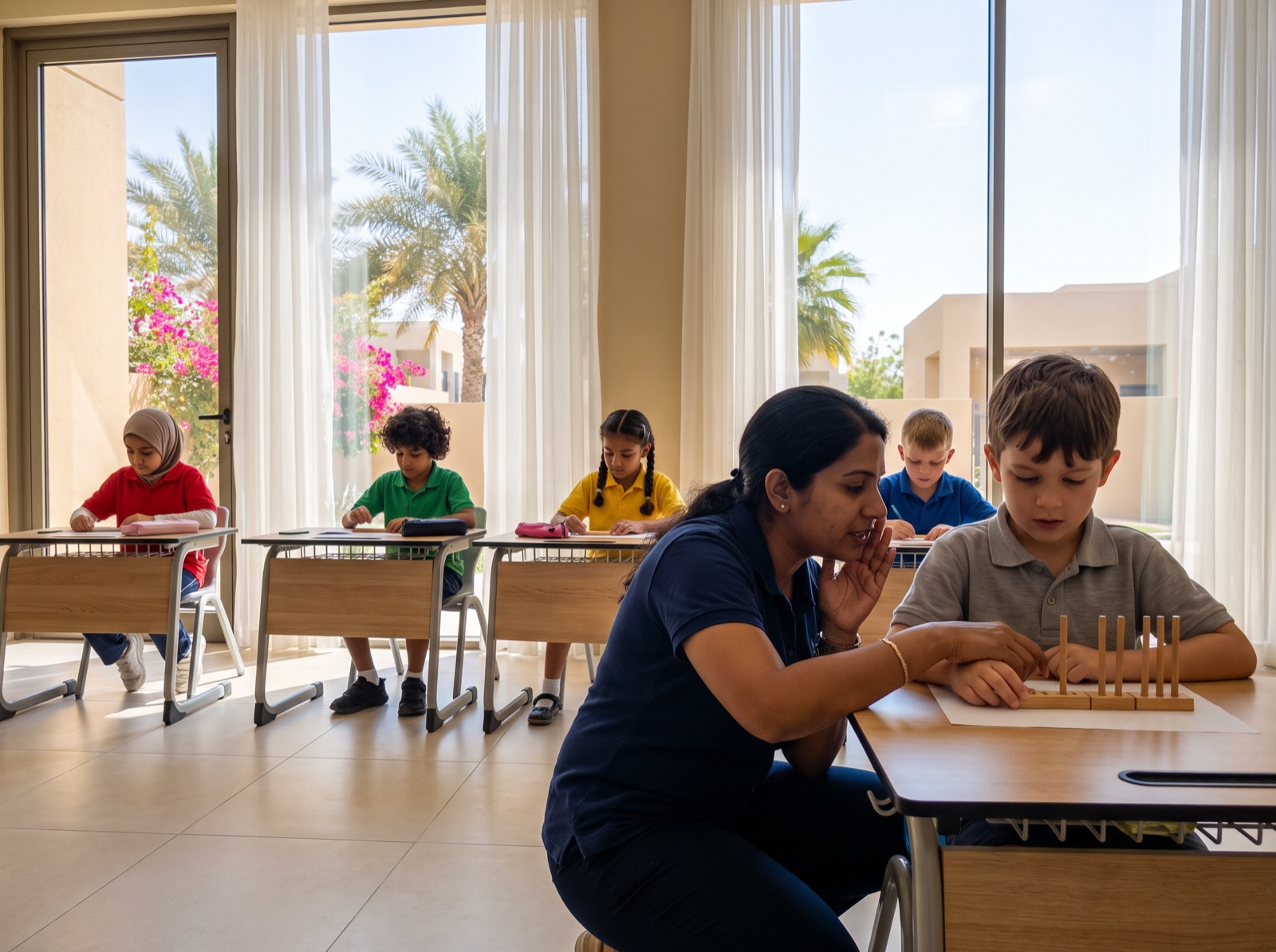
For many children, the hardest part of the day is not at home but at school: the move into class, group carpet time, the noise of the dining hall, the moment a task gets difficult. ABA delivered at school puts the therapist where those moments happen. It can work well, but only when the family, the school and the therapy team agree how it will run. This article is for parents considering it, and for SENCOs and inclusion leads who are asked to host it.
What school-based ABA is
School-based ABA is a programme written by a BCBA and delivered by a therapist, usually an RBT, in the school setting. The goals are chosen for school life: joining a group activity, following an instruction given to the whole class, asking for help, managing transitions, coping with a change of routine, playing at break time, or replacing a behaviour that is getting in the way of learning.
As with any ABA programme, the therapist records data every session, so progress can be reviewed rather than guessed at. The difference is the setting. Skills are taught with the real teacher, the real classmates and the real timetable, which means less work later to make them carry over.
How it differs from an LSA or shadow teacher
Schools and parents often mix the two roles up, and they are genuinely different.
An LSA or shadow teacher supports a child through the school day so they can access learning: keeping them on task, adapting work under the teacher's direction, supporting them socially and helping them through difficult moments. Their focus is the child's whole day in class. Our guide to LSAs and shadow teachers explains those roles.
An ABA therapist at school is there to deliver a specific programme with specific targets, written and supervised by a BCBA, often in set sessions rather than for the whole day. They are teaching particular skills and measuring them, not providing general classroom support.
The two can work together well. A child might have an LSA for the school day and ABA sessions for particular goals, with the BCBA sharing strategies so the LSA can use them consistently in between. What matters is that everyone knows who is doing what.
Working with the SENCO
The SENCO, or inclusion lead, is the key person. Nothing should happen in school without the school's agreement, and a good therapy team treats the SENCO as a partner rather than a gatekeeper. In practice, that means:
- Agreeing in advance when and where sessions take place, and how they fit around lessons
- Agreeing the goals with the school, so they support what the class teacher is working on
- Clarifying the school's own rules for external specialists: safeguarding, documentation, and what the therapist can and cannot do in class
- Agreeing how and how often the therapist will communicate with the class teacher and SENCO
- Sharing progress at review points, alongside the school's own support plan for the child
Schools differ a great deal in how they handle external providers. Some welcome therapists into the classroom, some prefer sessions in a separate room, and some need time to agree terms. Patience at this stage usually pays off. Our article on the SENCO's role explains what the SENCO does day to day.
The regulatory context in the UAE
Private schools in the UAE work within the inclusive education frameworks set by their emirate's regulator: KHDA in Dubai, ADEK in Abu Dhabi and SPEA in Sharjah, while public schools follow the Ministry of Education's own processes. Broadly, these frameworks expect schools to identify students of determination and plan support for them, and many schools record that support in an individual education plan. How a school applies its framework to external therapists on site is for the school to decide, so ask the SENCO what their policy requires.
For families, the practical point is to bring your child's reports and any existing plan into the conversation, and to make sure the ABA goals and the school's plan point in the same direction. Our guides to IEPs in KHDA schools and preparing for an IEP meeting can help.
How we work in schools
At Special Minds, ABA can take place at your child's nursery or school with the school's agreement, and we coordinate with the SENCO directly so the therapist's work fits the classroom rather than competing with it. A BCBA writes and reviews every programme, an RBT delivers the sessions one-to-one, data is taken every session, and the programme is reviewed with the family monthly. Sessions can run at school, at home, or both.
Read more on ABA therapy at school and ABA therapy in Dubai. If your child needs support across the whole school day, see our LSA and shadow teacher services.