Therapy
What is ABA therapy? A plain-English guide for UAE parents
If someone has suggested ABA for your child — a paediatrician, a nursery, another parent at the school gate — you have probably searched for it and found two very different pictures. One describes a well-established way of teaching skills to autistic children. The other describes something rigid and outdated. Both pictures exist, because ABA has changed a great deal over the years and the quality of what is offered under the name still varies. This guide explains what it actually is, in plain words, so you can judge what you are being offered.
What ABA stands for
ABA is Applied Behaviour Analysis. "Behaviour" here does not only mean difficult behaviour. It means anything a person does: asking for a drink, putting on shoes, taking a turn, saying "stop", sitting through a haircut. "Analysis" means looking carefully at what happens before and after a behaviour, to understand why it happens and what helps it change. "Applied" means the point is everyday life — skills that matter to your child and your family, not skills that only exist in a therapy room.
In practice, ABA is a structured way of teaching. A skill is broken into small steps, each step is taught and practised, and the therapist records how it goes so everyone can see whether it is being learned. When something works, it is kept. When it does not, it is changed.
The ideas behind it, without jargon
Three ideas do most of the work.
- What happens after a behaviour affects whether it happens again. If asking for help gets help quickly, a child is more likely to ask next time. Therapists call this reinforcement, and it is usually praise, attention, a favourite toy or simply getting the thing your child wanted.
- What happens before a behaviour matters too. A clear instruction, a visual timetable or a warning before a change can be the difference between a calm transition and a hard one.
- Behaviour has a reason. A child who hits, runs or screams is usually getting something or escaping something. Working out which comes before any attempt to change it, and the aim is to teach a better way of meeting the same need.
None of this is exotic. Good teachers and parents use these ideas every day. ABA applies them deliberately, consistently and with data.
What a session actually looks like
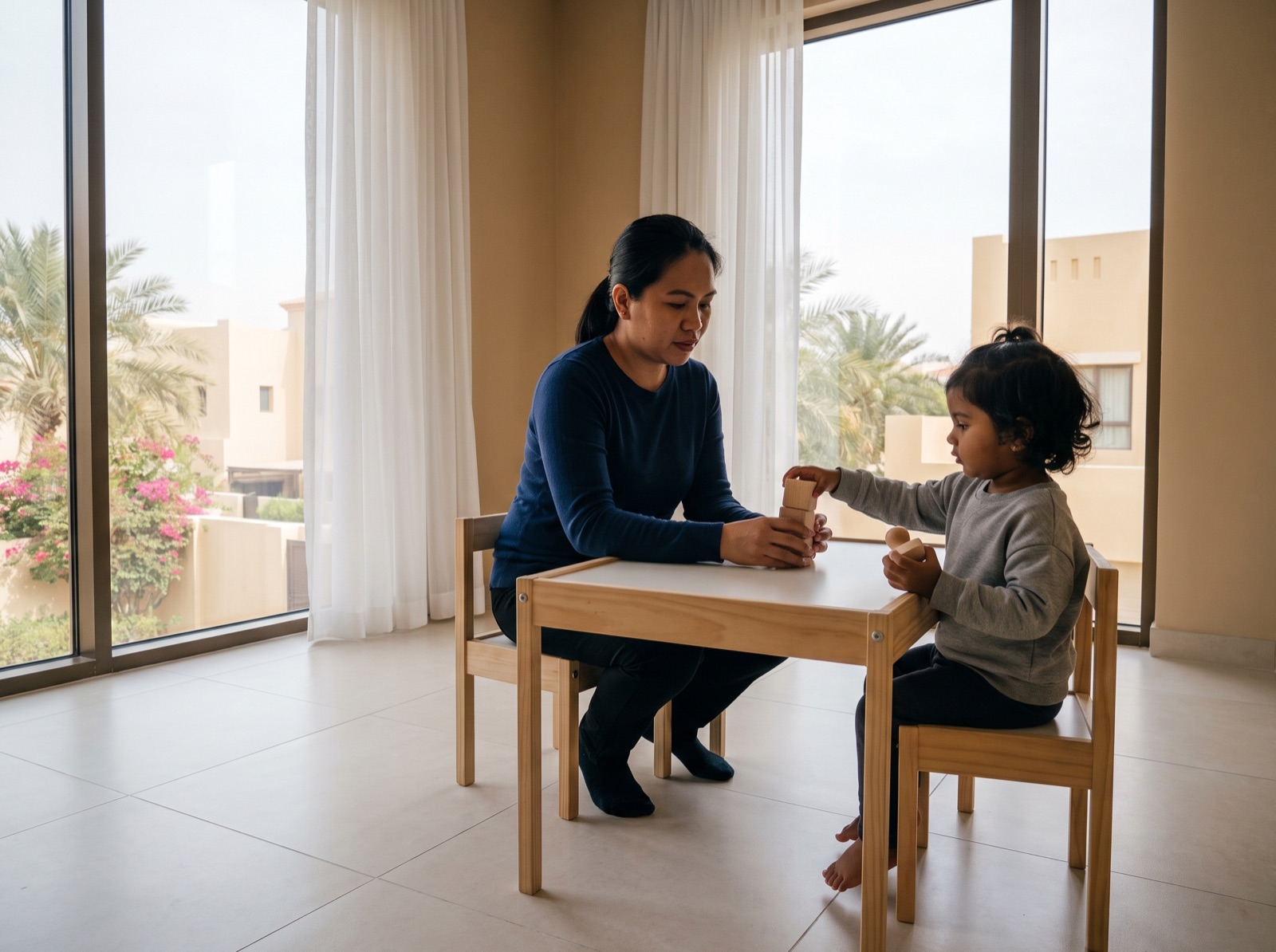
For a young child, a well-run session often looks like play. The therapist follows what your child is interested in — cars, bubbles, a favourite song — and builds teaching into it: waiting for a request before blowing the bubbles, taking turns pushing the car, naming colours as the blocks go up. For an older child, a session might be practising a morning routine, working through homework in short blocks, or rehearsing what to do when a game is lost.
Throughout, the therapist takes notes on specific targets: how often your child asked, how much help they needed, whether they managed a step alone. Those notes are what turn "it felt like a good week" into something you can actually review. If you want to know what the very first visit involves, our guide to your child's first ABA session walks through it.
Who delivers it, and who it is for
Most ABA programmes are run by two levels of practitioner. A BCBA (Board Certified Behavior Analyst) is the clinician: they assess, write the programme, set the goals and review the data. An RBT (Registered Behavior Technician) delivers the sessions day to day, working under the BCBA's supervision. Both credentials are issued by the same US-based board, the BACB. A programme needs both: a thoughtful plan, and someone delivering it the same way every time. Our article on BCBA vs RBT explains the roles in more detail.
ABA is most often used with autistic children, but the same methods are used with children who have global developmental delay, Down syndrome, intellectual disability or ADHD-related behaviour, and with specific problems such as toileting, sleep or feeding. Whether ABA is the right tool for your child is a question for a clinician who has met them, not for a website.
What good ABA looks like today
Older forms of ABA drew real criticism: long hours of repetitive drilling at a table, a heavy focus on compliance, and too little attention to whether the child was comfortable. Practice has moved a long way since. A good programme today is built around your child's interests, uses play and daily routines as teaching moments, treats your child's signals that they are unhappy or need a break as meaningful, and works on skills that make life easier for your child rather than on making them look less autistic. We look at this in more depth in modern ABA: what has changed.
If a programme you are offered looks like compliance training, ask why. A good provider will welcome the question.
How ABA works in the UAE
In the UAE, ABA is offered by clinics, centres, school-based teams and individual therapists, and it can take place at home, at nursery or school, or in a centre. Many families pay privately. Some UAE insurance policies reimburse ABA on a pay-and-claim basis, but cover varies, so check your own policy before you commit; our article on ABA and insurance in the UAE covers what to ask.
At Special Minds, a BCBA writes and reviews every programme and an RBT delivers the sessions one-to-one, at home or at your child's nursery or school, across all seven emirates. Data is taken every session, the programme is reviewed with you each month, and parent coaching is part of every programme. Registration is AED 499: it pays for the BCBA's review of your child's brief, the first goals and recommended hours, and the introduction of one matched RBT, and it is non-refundable. Sessions start from AED 325 an hour, with the rate confirmed in writing before you begin.
To see how we run it, start with ABA therapy in Dubai, or ABA therapy across the UAE if you live in another emirate. If you would rather understand your child's needs before choosing any therapy, a standalone assessment (AED 499) with our Education and Program Director is a lower-commitment first step.