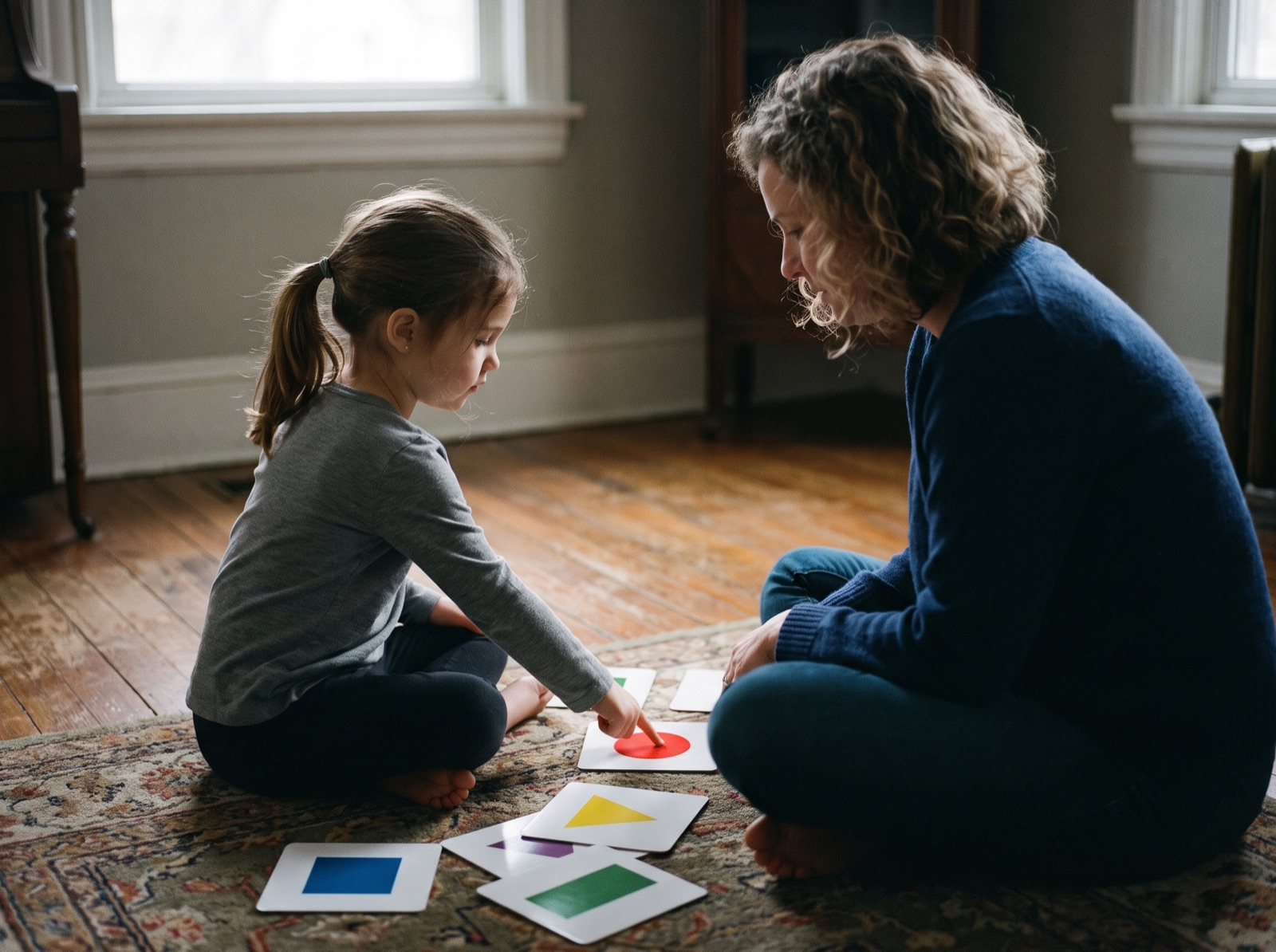
Selective Mutism · Dubai & UAE
Selective mutism support for children
For children who talk freely at home and go quiet at school. Therapy, coordinated with the classroom.
Early signs to look out for
What families often notice first.
Not a checklist for diagnosis. Just what usually prompts a conversation.
- Talks freely at home but is consistently silent at school, nursery, or with certain people
- Freezing, a blank expression, or visible physical stiffness when expected to speak in specific settings
- Relying on nodding, gestures, or writing instead of speaking to teachers or unfamiliar adults
- The silence has lasted more than a few weeks and isn't easing as they settle in
- Avoiding eye contact or physically withdrawing when spoken to directly in those settings
- Visible anxiety around social situations that goes beyond ordinary shyness
How Special Minds helps
A plan, not a placement.

Therapy that starts where they're comfortable
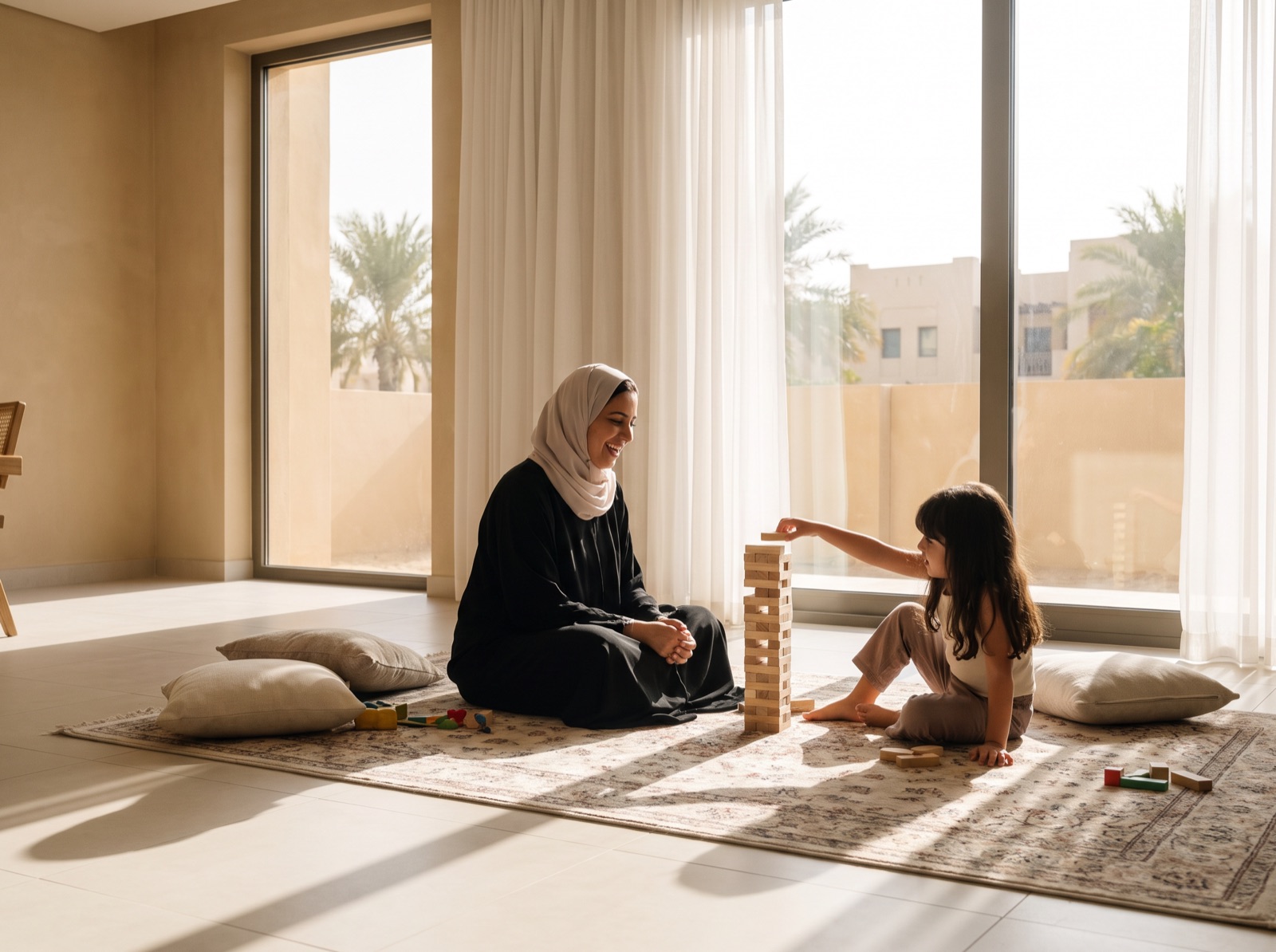
Speech and language therapy often begins at home or in a low-pressure setting, then builds gradually toward the places your child currently stays silent.
Parent coaching
Specific, practical ways to respond when your child doesn't speak — so daily interactions support progress instead of accidentally reinforcing the silence.
School coordination
We work directly with teachers on classroom approach, and can place an LSA or shadow teacher where a child needs closer, one-to-one support to build confidence in class.
Small, paced steps
Progress is measured in stages — eye contact, gestures, a whisper, a word to one trusted adult — never by pushing a child to speak before they're ready.
Support in Dubai & the UAE
Local, practical, no waitlists in the dark.
We work with children across Dubai and Abu Dhabi, usually starting with a short call to understand where the silence shows up, how long it's been going on, and what's already been tried, before recommending a therapy plan.
Frequently asked
Questions parents ask us.
- Is this just shyness my child will grow out of?
- Ordinary shyness tends to ease as a child settles in. Selective mutism is when the silence in specific settings — school, clubs, certain relatives — stays consistent for weeks or months and doesn't shift with familiarity. That pattern is worth having looked at rather than waited out.
- Does my child need a formal diagnosis before we start therapy?
- No. Speech and language therapy and parent coaching can start in parallel with, or even before, a formal diagnosis is confirmed. We work with what you're seeing now, and can point you toward a specialist assessment alongside it if one's needed.
- What happens if my child won't speak to the therapist either?
- That's expected, and it's exactly what our therapists are trained for. Early sessions usually don't ask for speech at all — they use play, drawing, and low-pressure games to build trust first, so speaking becomes possible rather than forced.
- Can you work with my child's school directly?
- Yes, and it usually helps a great deal. We coordinate with teachers on how they respond day to day, and where a child needs closer, in-class support, we can place an LSA or shadow teacher to support gradual participation without singling them out.
- How long does it take before my child is speaking normally at school?
- It varies by child, so we won't put a timeline on it upfront. What you will get is a clear, staged plan with specific goals, so you can see progress in the small steps — a nod becoming a whisper, a whisper becoming a word — well before full, everyday speech.
Not sure where to start?
Start with an assessment.
A behavioural and educational assessment of your child at home, school or a centre, then a call with our Educational & Program Director to talk through what we found — and a specific recommendation, not a guess.
No commitment to ongoing support, and we will tell you if the answer is someone other than us.
Let's talk about selective mutism support for your child.
No pressure. Just a conversation with our clinical lead.