Behaviour therapy · Children & teenagers
Behaviour therapy for children, starting with why.
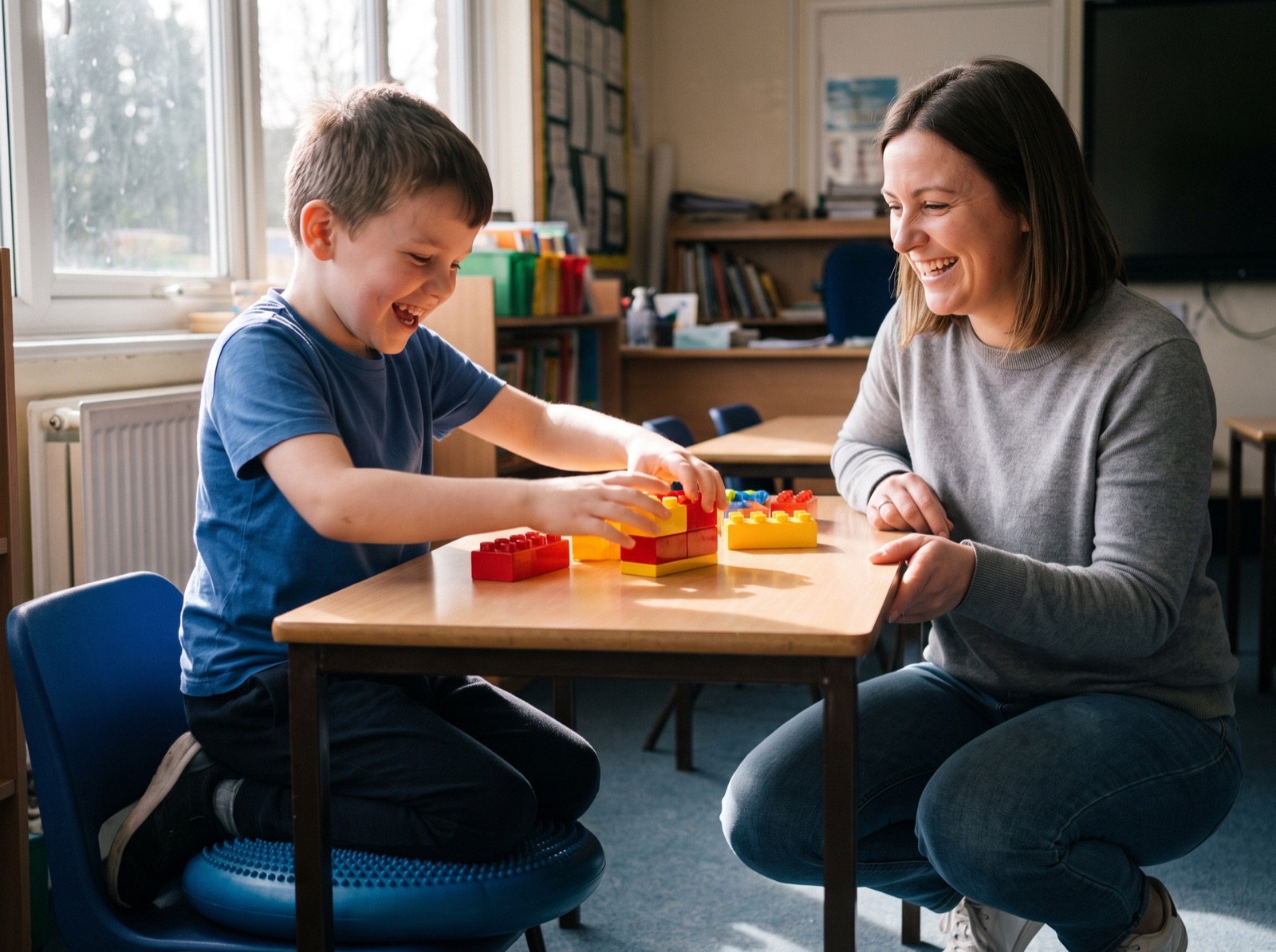
When a behaviour is taking over family life, a BCBA works out what it does for your child and an RBT teaches something that works better.
Behaviour therapy for children, at a glance
Updated
- Who it is for
- Children and teenagers whose behaviour is getting in the way at home or at school; we do not offer therapy or CBT for adults.
- What it covers
- Tantrums, aggression and self-injury, and difficulties with toileting, sleep and feeding.
- How it works
- A BCBA looks at when the behaviour happens and what it achieves for your child, then writes a plan an RBT delivers at home or at school.
- Price
- From AED 325 an hour; AED 499 opens the search and pays for the BCBA's review of your child's brief.
Behaviour, understood
Every behaviour is telling you something.
A child who hits when the tablet goes off, screams through every haircut, eats only three foods or still is not sleeping through at six is not being naughty, and their parents are not doing it wrong. Behaviour that seems out of proportion usually makes sense once you can see what it does for the child: getting something, escaping something, or coping with something that is too much.
That is where behaviour therapy built on Applied Behaviour Analysis starts. A BCBA looks at what happens just before the behaviour, what follows it and when it is most likely, then writes a plan that does two things: makes the hard moments less likely, and teaches your child a better way to get the same need met — asking for a break, for help, or for 'all done'.
This page is about children. If you are an adult looking for behaviour therapy or CBT for yourself, we are not the right service, and a psychologist who works with adults will be far better placed to help. For a child, the plan is delivered one-to-one by an RBT at home or at school, with you coached to use it too.
What behaviour therapy can help with
The behaviours that wear a household down.
Tantrums and meltdowns
Telling apart frustration and overload, because the two need different responses, then teaching your child ways to ask for help or a break.
Aggression
Hitting, biting, kicking or throwing, towards siblings, parents or classmates. The plan keeps everyone safe first, then teaches what to do instead.
Self-injury
Head-banging, biting or scratching themselves. The BCBA looks closely at why it happens, and it is worth asking your paediatrician to rule out pain or a medical cause alongside.
Toileting
From sitting on the toilet at all to staying dry through the day and using toilets away from home, in steps small enough for your child to manage.
Sleep
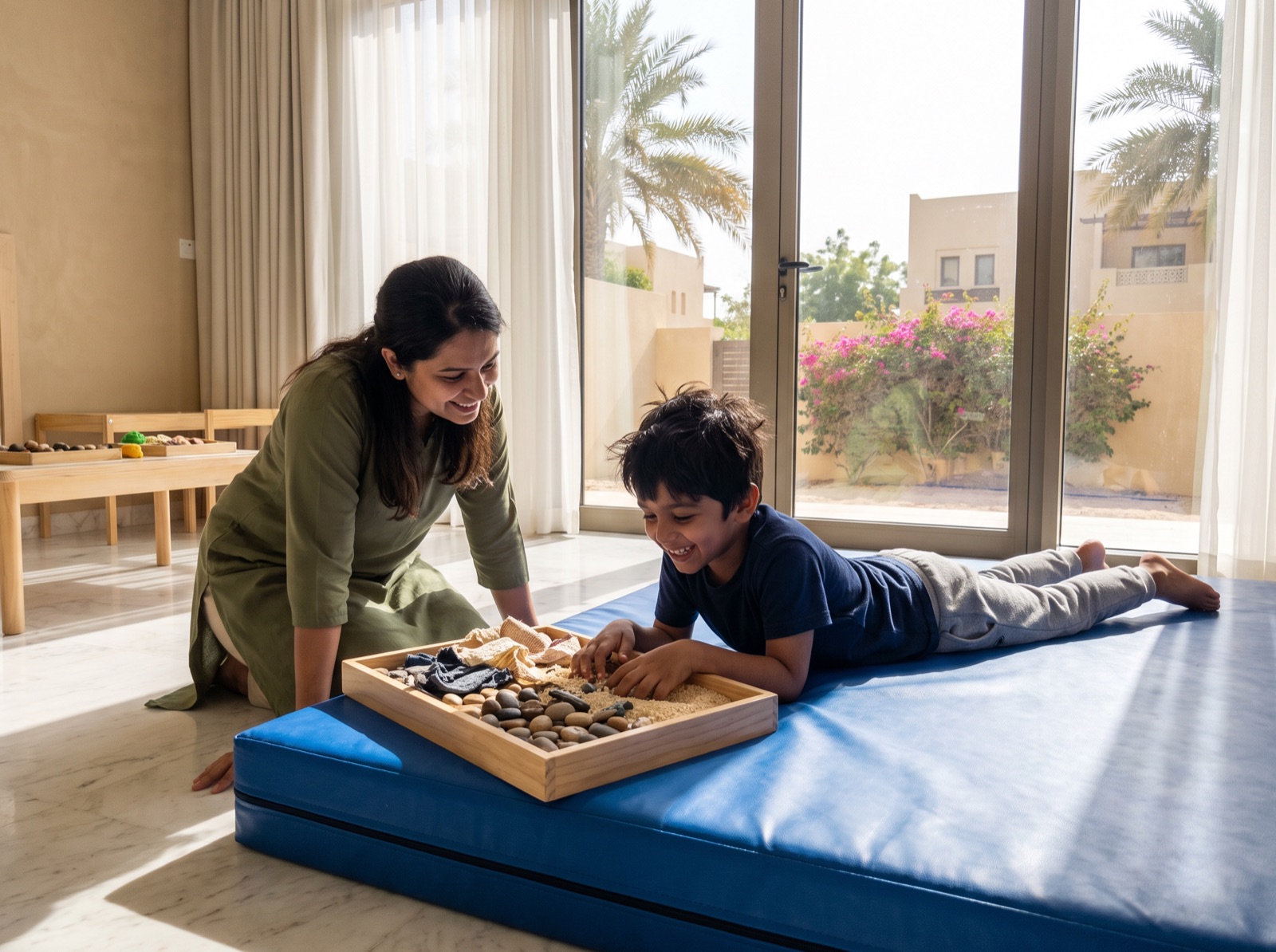
Bedtimes that fall apart, night waking and needing a parent in the room. Much of this work is done by coaching you, because the hardest moments happen when no therapist is booked.
Feeding and mealtimes
Very narrow diets, refusing new foods and mealtimes that end in tears. Behaviour work sits alongside medical and feeding advice, never in place of it.
How a behaviour plan works
Four parts, in the right order.
Understand it
The BCBA reviews your description and observes your child, looking at when the behaviour happens and what it achieves.
Make it less likely
Changes to the day that make the hard moment rarer: a warning before a transition, a visual timetable, a choice instead of an instruction.
Teach something better
A skill that gets your child the same result more safely: a word, a sign, a card or a gesture that means 'stop', 'help' or 'break'.
Respond the same way
Parents, the RBT and, where it is involved, the school all react consistently, so the new skill is the one that reliably works.
Pricing
Two figures, both up front.
Open the search
AED 499
- A BCBA reviews your child's brief
- Goals and weekly hours recommended
- One matched RBT introduced
Sessions
From AED 325/hr
Confirmed in writing before the first session, and lower as the weekly hours go up. Billed for the sessions each month holds.
- Programme written and reviewed by a BCBA
- Data every session, review every month
- RBT replaced if the fit is wrong
More on ABA therapy
Related pages.
ABA therapy in Dubai
What ABA is, who it helps, and how our BCBA/RBT team runs it at home and at school.
Read moreADHD support
Structure, routine and classroom support for children with ADHD.
Read moreAutism therapy in Dubai
ABA, speech and occupational therapy for autistic children, at home or at school.
Read moreABA therapy at home
One-to-one sessions in your own home, with the price and the register form on the page.
Read moreBCBA-supervised ABA
What a BCBA does, how to check one, and how supervision works in our programmes.
Read moreAssessment
A behavioural and educational assessment, then a clear recommendation.
Read moreFrequently asked
Questions families ask.
- What is behaviour therapy for children?
- Behaviour therapy for children helps with behaviour that is getting in the way of family life, school or safety, such as tantrums, aggression, self-injury, or difficulties with toileting, sleep and eating. Ours is built on Applied Behaviour Analysis: a BCBA works out why the behaviour happens and writes a plan, and an RBT delivers it with your child.
- Do you offer behaviour therapy or CBT for adults?
- No. Our behaviour therapy is for children and teenagers, delivered at home or at school with their families involved. If you are looking for cognitive behavioural therapy for yourself, a psychologist who works with adults is the right person to speak to.
- Is a behaviour therapist the same as an ABA therapist?
- Not always. 'Behaviour therapist' — or 'behavior therapist', in American spelling — is a broad title that different practitioners use. With us, behaviour therapy means ABA: the plan is written and reviewed by a BCBA (Board Certified Behavior Analyst) and delivered by an RBT, with data taken every session.
- My child's tantrums are getting worse. When should we get help?
- If the tantrums are frequent, long, getting more intense or stopping your family doing ordinary things, it is worth talking to someone. You do not need a diagnosis to ask us. If your child is hurting themselves or others, also speak to your paediatrician, who can check for anything medical behind it.
- Can behaviour therapy address aggression towards siblings?
- Yes, it can be a central part of the plan. The BCBA looks at when the aggression happens — over toys, attention, noise or transitions — and the plan combines keeping everyone safe, changing the situations that set it off and teaching your child another way to get what they need. Parents, and siblings where they are old enough, are shown how to respond in the same way.
- Does my child need to be autistic to have behaviour therapy?
- No. Behaviour therapy is used with autistic children, with children who have ADHD, developmental delay or an intellectual disability, and with children who have no diagnosis at all but whose behaviour has become hard to manage. The BCBA decides whether ABA-based behaviour work is the right approach for your child.
- Can behaviour therapy help with toilet training an older child?
- Toileting can be worked on at any age. The BCBA breaks it into small steps, from sitting on the toilet to staying dry and using unfamiliar toilets, and you are coached to keep the routine going between sessions. It is worth checking with your paediatrician that nothing medical is getting in the way.
- How long does behaviour therapy take?
- There is no fixed length; it depends on the behaviour, how long it has been happening and how consistently the plan is used. Progress is measured every session and reviewed with you monthly, so you can see whether the plan is working and the BCBA can change it if it is not. One month's written notice ends the arrangement at any time.
- Will you work with my child's school on the same behaviour?
- With the school's agreement, yes. Sessions can run at school, and we coordinate with the SENCO or inclusion lead so that school and home respond to the behaviour in the same way.
Further reading
Guides for this decision.

Autism
Autism meltdown vs tantrum: how to tell the difference
The practical difference between a tantrum and an autism meltdown, and why it changes how you should respond.
Autism
Potty training a child with autism: practical, judgment-free strategies
A practical, judgment-free guide to potty training an autistic child, from readiness signs to realistic timelines.
Autism
Sleep problems in autistic children: practical strategies that actually help
Why autistic children often struggle with sleep, and the routine and environment changes that genuinely help.
Autism
Autism and picky eating: why it happens, and what actually helps
Why picky eating is so common in autistic children, and the mealtime strategies that actually reduce conflict.
ADHD
Can ABA therapy help a child with ADHD?
Where behavioural approaches can help children with ADHD, where they cannot, and how they fit alongside the medical care your child's doctor provides.
Autism
Modern ABA therapy: what has changed, and what to look for
Why older ABA drew criticism, what autistic adults have said about it, how assent-based, play-based practice differs, and how to judge a programme today.
Tell us about your child.
A conversation first, on WhatsApp or by phone. No obligation, and a straight answer if we are not the right fit.